

The "Frozen" Conflict: Failures of the UN Security Council (1975–Present)
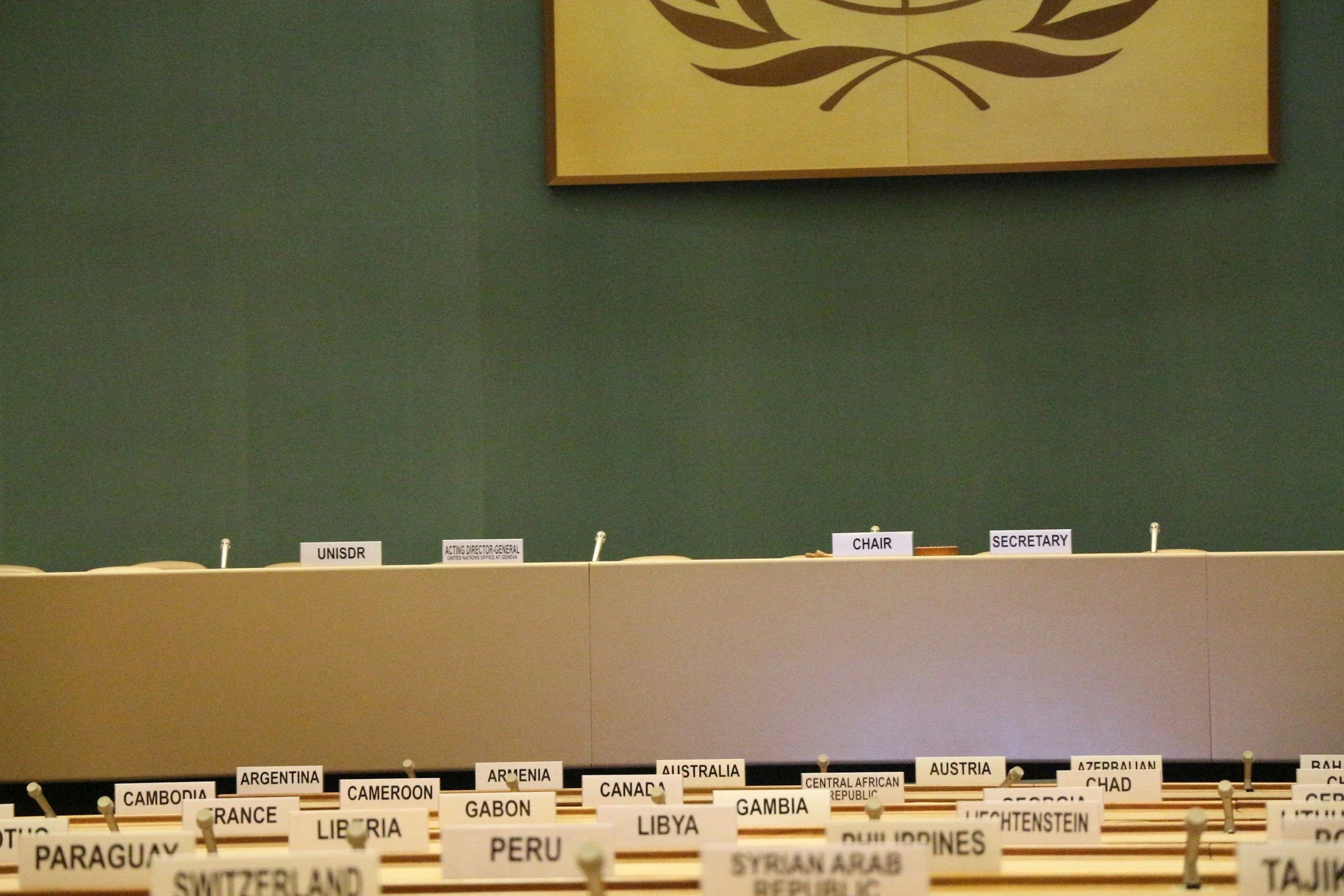
For 50 years, the United Nations Security Council (UNSC) has presided over the Western Sahara file. On paper, its resolutions call for self-determination and the protection of civilians. In reality, the Council has become the primary graveyard of Sahrawi aspirations. The failure to resolve Africa's last colonial dispute is not due to a lack of legal clarity—the ICJ and UN General Assembly have been clear since 1975. Rather, it is a failure of political will, driven by the Realpolitik of powerful permanent members who prioritize their strategic alliances with Morocco over the enforcement of the UN Charter.
The "Group of Friends": Gatekeepers of the Status Quo
An Exclusive Club
Resolutions on Western Sahara are not drafted by the Council as a whole, but by an informal, opaque body known as the "Group of Friends of Western Sahara" (France, USA, Russia, UK, and Spain).
The Dynamic: Within this group, France acts as Morocco’s unwavering diplomatic shield, while the United States (the "penholder" responsible for drafting resolutions) often dilutes language to avoid offending Rabat. This structural imbalance ensures that any resolution reaching the floor has already been sanitized of enforceable deadlines or sanctions.
The French Veto Threat
France’s role cannot be overstated. As Morocco’s former colonial ruler and strongest economic partner, Paris has consistently threatened to use its Veto Power to block any resolution that would impose a mechanism to force a referendum or monitor human rights. This "pocket veto" means that the Council rarely even discusses bold measures, knowing they are dead on arrival.
The MINURSO Anomaly (The "Blind" Mission)
The Missing Mandate
As detailed in previous sections, MINURSO remains the only modern UN peacekeeping mission without a human rights mandate.
The UNSC Failure: Every April, when the mandate is up for renewal, NGOs and non-permanent members (like South Africa or Timor-Leste) plead for the inclusion of human rights monitoring. Every year, the Security Council—led by French and US opposition—rejects this, creating a "zone of impunity" where blue helmets patrol past scenes of repression they are forbidden to report.
The Abandonment of the Referendum
From "Settlement Plan" to "Political Solution"
In 1991, the UNSC established MINURSO with a single, clear goal: to hold a referendum. By the early 2000s, faced with Moroccan obstructionism regarding voter lists, the Council effectively gave up.
The Shift: Under US pressure (notably during the tenure of James Baker), the Council shifted its language from "referendum" to "mutually acceptable political solution." This semantic shift was a diplomatic catastrophe for the Sahrawis. It effectively removed the requirement for independence, transforming a decolonization issue into a bilateral dispute where the stronger party (Morocco) holds veto power over the outcome.
Geopolitics Over International Law
The US Recognition (2020)
The ultimate failure of the Security Council framework came in December 2020, when the United States (a permanent member and the penholder) unilaterally recognized Moroccan sovereignty over Western Sahara in exchange for Morocco normalizing ties with Israel (the Abraham Accords).
The Impact: This shattered the pretense of US neutrality. While the Biden administration has walked back the rhetoric, it has not reversed the recognition. This signals to the world that territory can be acquired by force if the geopolitical price is right—a direct violation of the UN Charter's core principle.
Counter-Terrorism & Migration
For European powers (Spain and France), Western Sahara is viewed through the lens of security, not justice. Morocco is a key partner in controlling migration flows to Europe and fighting terrorism in the Sahel. The Security Council’s inaction is a calculated trade-off: Sahrawi rights are sacrificed to secure Moroccan cooperation on border security.
Further Resources and Academic References
"The UN Security Council and the Western Sahara" — Analysis of the "Group of Friends" dynamic. International Crisis Group.
"Vetoing Peace" — Report on how the P5 (Permanent 5) block conflict resolution. Security Council Report.
"The Penholder System" — Academic article on how the US controls the drafting process. Global Governance Journal.
UNSC Resolution 690 (1991) — The original mandate promising a referendum, now largely abandoned.
Frequently Asked Questions
Why doesn't Russia veto pro-Morocco resolutions?
Russia typically abstains rather than vetoes. While it verbally supports self-determination, it rarely expends political capital on Western Sahara, preferring to use it as a bargaining chip in broader negotiations with the West.
Can the General Assembly override the Security Council?
In theory, yes (under the "Uniting for Peace" resolution), but it is politically difficult. The General Assembly is firmly on the side of self-determination, but it lacks the enforcement power (sanctions/peacekeepers) that the Security Council holds.
What is the "Penholder"?
The "penholder" is the UNSC member responsible for leading negotiations and drafting resolutions on a specific topic. The US has held the pen on Western Sahara for decades, giving it disproportionate influence over the peace process.